Home » Travel Tips » Weather Conditions on Kilimanjaro by Month
Home » Travel Tips » Weather Conditions on Kilimanjaro by Month
Understanding the weather conditions on Kilimanjaro by month is essential for planning a successful climb. Mount Kilimanjaro has diverse climatic zones, from the lush rainforest at its base to the icy alpine desert near the summit. Weather affects trail conditions, temperatures, and overall trekking experience. Planning your climb according to the month can make the journey safer and more enjoyable, while also helping you prepare for an optional safari adventure afterward.
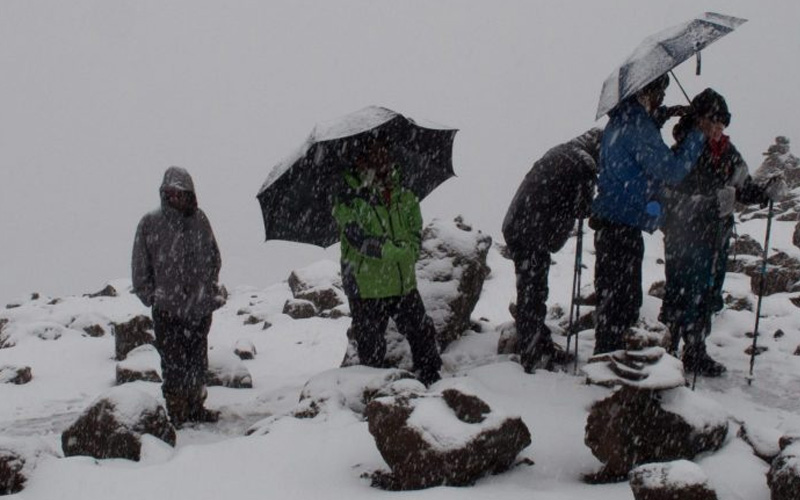
The mountain experiences two main seasons: dry and rainy. The dry season offers clear skies, stable trails, and easier trekking. In contrast, the rainy season brings wet, slippery conditions and reduced visibility. Although climbing is possible during the wet months, most travelers prefer the dry season for comfort and scenic views.
January and February are part of the short dry season, with mild temperatures and mostly clear skies. This is ideal for trekking the popular routes, as trail conditions are generally good. By March, however, rainfall increases toward the end of the month. At the base, temperatures range from 20–25°C (68–77°F), while summit temperatures can drop to -5°C (23°F). To maximize safety and enjoyment, start treks early in the morning before afternoon showers.
April and May are the wettest months on Kilimanjaro. Trails can become muddy and slippery, and cloud cover often obscures the summit. Summit temperatures during these months can drop as low as -7°C (19°F). While climbing is possible, trekkers should be well-prepared with waterproof gear, gaiters, and a flexible itinerary to account for changing conditions. Many travelers prefer to schedule their climbs during drier months for a more comfortable experience.
June through October is widely regarded as the best time to climb Kilimanjaro. Days are generally sunny and dry, with temperatures at the base between 15–25°C (59–77°F) and summit temperatures ranging from -7 to -1°C (19–30°F). Clear skies make for breathtaking views and excellent photo opportunities. Nights can be extremely cold, especially above 4,000 meters, so climbers should bring warm layers and insulated sleeping gear.
November and December experience short rains, usually in the form of brief afternoon showers. Morning treks remain generally clear, making it possible to reach camps before rain begins. Climbers should pack waterproof clothing and layers to handle sudden changes. Summit attempts are still feasible, but careful monitoring of weather and trail conditions is recommended.
After completing your Kilimanjaro climb, many travelers choose to extend their trip with a wildlife safari. Booking with Pangolin Expeditions offers access to Tanzania’s most famous national parks, including the Serengeti, Ngorongoro Crater, Tarangire, and Lake Manyara. A safari provides the perfect balance of adventure and relaxation, allowing you to witness the “Big Five” and other wildlife in their natural habitat.
Combining a Kilimanjaro trek with a Pangolin Expeditions safari offers the ultimate Tanzanian adventure, blending physical challenge with unforgettable wildlife encounters.
Plan your climb and safari for a seamless experience. Pangolin Expeditions provides professional guides, tailored itineraries, and full support for both Kilimanjaro treks and safaris. Their expertise ensures safety, comfort, and an unforgettable adventure through Tanzania’s mountains and wilderness.
Hear from our clients! At Safari Peak, we’re proud to share stories of unforgettable Tanzania safaris, thrilling Kilimanjaro climbs, and serene beach escapes, all crafted to create lasting memories.

 Benjamin Miller
Trustindex verifies that the original source of the review is Google.
I had an absolutely incredible experience in Tanzania with Pangolin Travelers Expeditions. My adventure began in Serengeti National Park, where the sweeping landscapes and abundant wildlife completely exceeded my expectations. Our guide, James, was exceptional—his deep knowledge, sharp eye for spotting animals, and genuine passion for the bush made every moment unforgettable. Tarangire was teeming with elephants and beautiful baobab trees, while Ngorongoro Crater delivered jaw-dropping wildlife encounters in the most dramatic setting. The accommodations were clean, cozy, and ideally located near the parks. The food was delicious and hearty throughout the trip. If you're looking to explore the best of Tanzania, this journey with James and Pangolin Travelers is a must! Salome PedroI had the best time in Zanzibar with Pangolin Travelers Expeditions! Everything was well organized, and the team was super friendly and helpful throughout the trip. From the beaches to the spice tour and Stone Town, every moment was memorable. I felt safe, relaxed, and truly taken care of. Highly recommend them if you're planning a trip to Zanzibar!
 Haji HassanThe Experience Provided by this Locally Owned Tanzania Company is Superb, Experience Tanzania with the best travel company Pangolin Travelers' ExpeditionsShowing our latest reviews
Explore some of the Similar Tanzania Safari Deals and Choose your Best Safari with us